My grandmother Josephine Molin left Sweden at age 17, traveling alone to a new world. Later, two siblings followed in her footsteps. But bold Josephine was the first to make the trip from the slow pace of rural Sweden to the vitality and chaos of late 19th century Chicago.
Josephine was born Josefina Henrietta Molin on August 22, 1871, in the village of Mosjö in Örebro County. Josefina had three older sisters, an older brother, and a younger sister. The farm, located in an area of good agricultural land, was not owned by Josefina’s father, Johan Fredik Molin. He was a tenant farmer, which was common, and employed several farmhands and a maid.
When Josefina was six years old, her father died at the young age of 39. Three years later, her mother, Inga Sofia, married Karl Johan Jansson, the widower of her sister-in-law. Seven years later, Inga Sofia died at the age of 52, leaving four children in a household now headed by their stepfather. Within two months, Josefina’s older siblings Elin Sofia and Carl Johan moved out.
Only Josefina , age 16, and Laura, age 14, were left in the home. The following year, 1888, Josefina made a daring change. She traveled by the steamship Dronning Lovisa out of Göteborg, bound for Chicago. Soon after, in 1890, the Törsjo household completely dissolved. Laura joined an older sister in the city of Örebro and Carl Johan followed Josefina to Chicago. In 1895, Laura joined Josefina and Carl in Chicago.
Why did Josefina, just 17, make the difficult trip to arrive alone in that far-away city? There were likely both push and pull factors. During the late 19th century, commercialization and global markets made subsistence farming untenable for many in Sweden. Between 1880 and 1893, over 500,000 Swedes immigrated to the United States. 1 And Josefina may have found the hard labor of the farm untenable now that she was orphaned and working for her stepfather. As Josefina demonstrated throughout her adult life, she was not afraid to gamble on a chance to improve her life.
Chicago beckoned with possibilities. It was a boom town and needed workers . It had the largest population of Swedish immigrants of any city in the United States. Once there, Josefina joined a community of Swedes that had grown during the 1880s from about 18,000 to 43,000 people. Swedish newspapers thrived. Young people met future spouses at Swedish churches. Singing and sports clubs, fraternal lodges, temperance and educational organizations…added to the diversity of Swedish life in Chicago. 2 Although Josephine traveled alone, she may have had contacts that helped her find housing and work and to integrate into the Swedish community.
Many poor female immigrants of the time found work in garment factories or as domestic servants or laundry workers. I have no record of where Josefina worked or lived after her arrival; federal census records from 1890 were burned in a 1921 fire at the U.S. Commerce building in Washington D.C. However, most young immigrants, male and female, lived in boarding houses 3 and most Scandinavian immigrant women on their own did sewing work for “pin money” wages that barely constituted a living. 4
There were diversions, though, that lightened the hardships. Living away from the scrutiny of parents and pastors, the mobility of the new streetcar system and the anonymity of public spaces such as parks and department stores brought freedom of movement as well as opportunities for entertainment and meeting young men.
By the time of the [1893] fair, all but the desperately poor could go anywhere cheaply: to ballparks, racetracks, public parks, theaters, and cemeteries….It was the streetcar that gave young working people in the city their first real taste of personal freedom and young lovers their first chance to be alone together on Sunday, the great getaway day for Chicagoans, when the clanging yellow cars were packed from morning until midnight.”5
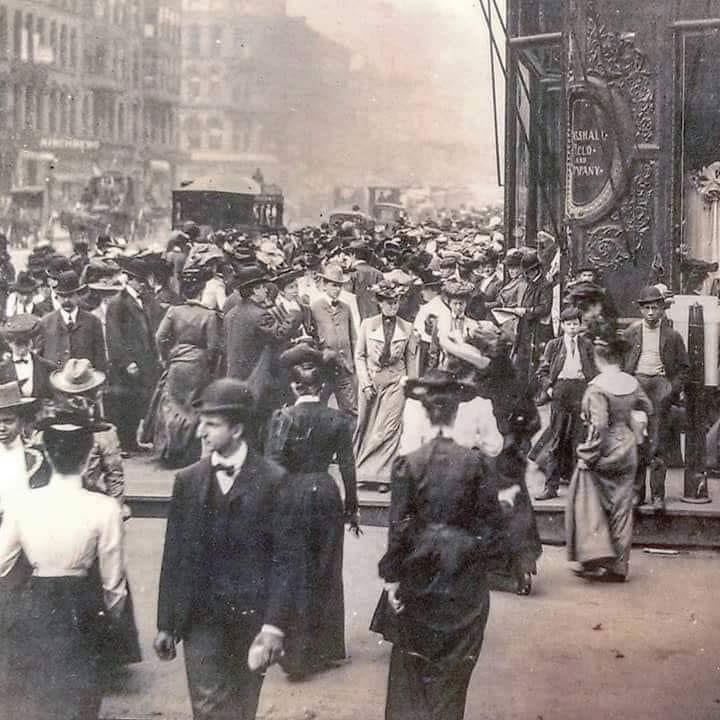
It was in the early 1890s that Josefina met her future husband, Carl Johan Jansson, one of the many young men drawn to Chicago by meatpacking, steel production, and manufacturing industries. Carl’s home town in Sweden was dominated by iron mining and steel production. His experience was in demand as he worked his way from New York to the Pullman Palace Car Company on the far south side of Chicago, where he found employment as a blacksmith.
Using the Americanized name of Josephine, my grandmother again acted boldly, entering into a relationship with Carl, now known as Charles Johnson. I don’t know exactly when or how they met, but it would have been during a time of feverish energy that culminated in the World’s Columbian Exposition of 1893. It’s hard to imagine the explosion of activity as the Columbian Exposition grounds were built. The Illinois Central Railroad expanded its service “until sixty-two trains a day stopped at Pullman” and street car service was extended to 111th Street.6 But these exciting times also brought chaos and economic struggles that encouraged a reliance on social networks and the stability of married life. Josephine Molin and Charles Johnson married on August 11, 1892. Roy Louis Johnson was born four months later, on December 2, 1892.
Josephine’s and Charles’s second child, my Aunt Florence, was born on August 24, 1897. The 1900 census describes the family as renting a single-family home at 207 112th Place, in the Chicago neighborhood of Roseland. That house, built in 1897, still exists today (see below). The Johnson family was received as members by the Elim Lutheran Church in 1901 and at that time, Roy and Florence were baptized. Josephine and Charles achieved an enviable security: a good job, home, two children, church, and community.
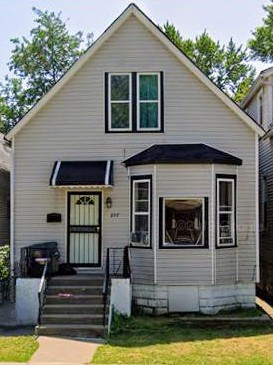
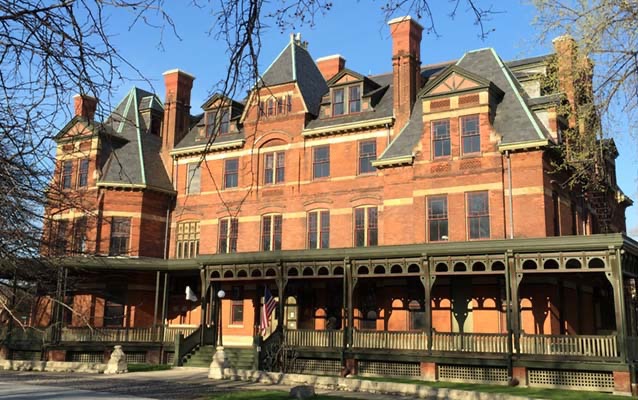
The Pullman Palace Car Company, where Charles worked, was located about two miles away from their home in Roseland. Roseland was settled by “the skilled and thrifty Swedes and Germans.”7 and grew into a residential and shopping center – respectable and attractive with only a small number of saloons. Close by was the model town built by George M. Pullman for the workers building the luxury rail cars that made him a fortune. The company town of Pullman is now a National Historical Park.
As Josephine and Charles settled into their life in Roseland, Josephine’s siblings moved further out, as many Swedish immigrants did. Carl Johan Molin married a recent Swedish immigrant, Caroline Swensson in 1894 and by 1896 he and his wife were living in Escanaba, Michigan. Laura Molin married Swedish immigrant Fred G. Nelson in 1900. The couple lived on the north side of Chicago until they moved to the western suburb of Wheaten sometime after 1900.
The Johnson family continued to live on the far south side of Chicago, Charles and later his son Roy, working at the Pullman Company, as blacksmith and office boy, respectively.
The course of the family changed dramatically in 1910. Josephine and 13-year old Florence undertook the long return trip to Sweden to find a new home for their family near Josephine’s older sister Hulda. Hulda lived in Södra Billinge, a village north of the city of Örebro, with her husband Karl Johan Häggström and their children. When I made a trip to Sweden in 2019, I met Ingrid Eriksson, a descendent of Hulda, who recounted family stories to me, including that of Josephine and Florence’s trip to Sweden in 1910. According to Ingrid, Josephine came to buy property in preparation for her family’s return to Sweden. She purchased a farm next door to her sister Hulda and arranged for a house to be built for her family. On May 25, 1910, Josephine and Florence returned to Chicago after their successful preparations for the family’s relocation.
In 1912, the family packed up and left Chicago. They arrived in Södra Billinge, Örebro County, on Oct 24 and settled on the farm that Josephine had purchased. The farm, named Duvnäs, consisted of about 12 acres of forest and farmland. The Johnsons had a large and comfortable home, “luxurious for the times,” according to my relatives in Sweden. In 2019, I visited the house and saw that for myself.

But 24-year-old Roy, a city boy, was restless on the farm. In February 1917, he left home for Kungsholmen, a borough of Stockholm, where he worked as a stock clerk at a metal and machine company. On May 5, 1918, He married Märta Karolina Rynning and on May 23rd their son, Roy Einar, was born.That September, Roy moved his family to Solna, a village just north of Stockholm. The following year, in October 1919, Roy died, a victim of the Spanish Flu pandemic. Roy’s body was brought back to Södra Billinge and buried at the church graveyard in Kil.
The stillness of winter on the Johnsons’ Örebro farm was filled with grief as Josephine, Charles, and Florence mourned the death of Roy. They clung to each other and to Josephine’s family next door and came through winter with hope and love intact. How they learned about my two-year old father, recently orphaned when his young parents died in the flu epidemic, I don’t know. Was it a coincidence that Lydia Eriksson travelled to Mosjö to give birth to my father and his twin brother? Mosjö, the village where Josephine grew up? Perhaps Josephine maintained relationships to extended family and friends in Mosjö and that is how the Johnsons learned about my father, who, two months after his parents’ death, arrived at their home in Södra Billinge.
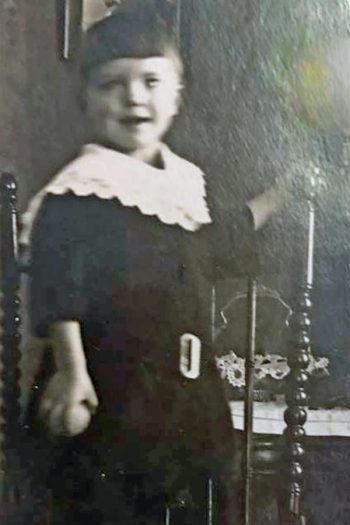
My father, Roland, in the Johnsons’ Södra Billenge home
The Johnson family reevaluated their life in Södra Billinge as Charles aged into his 60s and unmarried Florence approached 30. Working a farm in rural Sweden, perhaps at one time a dream, was no longer attractive or practical for the family. Josephine and her family once again
The family pivoted, once again moving across the Atlantic. In November 1926, Charles, Josephine, and Florence returned to Chicago, bringing 10-year old Roland with them. Back in the Roseland neighborhood, Charles returned to work at the Pullman Company. Now 64 years old, he was hired as a Special Police Officer, assisting the police with security at the Pullman Company.
The family settled in – young Roland lighting up their lives. Roland excelled at school. Florence married Hilding Thim, also an immigrant from central Sweden. Josephine, Florence, and Roland wrote letters to the family in Sweden, maintaining connections with Josephine’s Molin family and also with Roland’s biological siblings and aunts.
I have in hand a couple of those letters. In November 1928, two years after his arrival in Chicago, my father signed a letter to his biological sister, Sonya, “from cousin Roland.” While Josephine maintained relationships with my dad’s biological family, Josephine never told my dad the truth about his birth and adoption. It seems my dad believed his biological siblings were his cousins. Whether by birth or adoptions, my dad had a family network that extended from Chicago to Sweden, as his 1928 letter to his biological sister Sonya in Sweden reveals:
In my summer vacation I was visiting my aunt in a villa community, was like in the countryside. I had it so nice. We took photos so I send so Sonja can see how tall I have grown.
Thanksgiving Day we will celebrate at my Aunt’s place outside Chicago and eat turkey. Soon it is Christmas and we will have a big Christmas tree and then I will help in dressing it. We have electric light in it. I mark out me and my sister Florence and mother on the photo so Sonja will know who we are.”
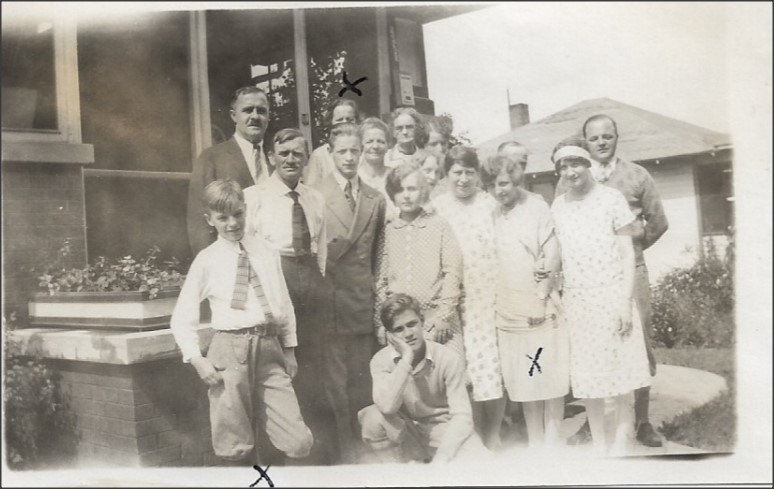
Josephine and Florence also worked to maintain contact with Roy’s widow, Märta, and his son, Roy Einar. Märta led a hard life and, without the protection of marriage, bore another son to raise alone. In a letter to her niece Signe Häggström, Josephine wrote that she had sent second hand clothes to Märta.
She is poor, he said, so I will send her money and clothes that Roland had as soon as I can.
Josephine also wrote to my father’s biological sister, Sonya. In a 1933 letter, she brags about Roland’s success in school and engineering studies at a technical school. She reassures Sonya that her husband Charles “is police at the railway so we are well off although great poverty has been here. She continues,
Years pass fast, we have been here for 7 years. The only thing I regret is that I didn’t tell Little Roland that I wasn’t his original mother; now I can’t.
I imagine that my father was a joy to his adoptive mother. He was a happy, bright child, successful in his new life in Chicago. Holding back the truth of my father’s birth was, indeed, a mistake, and that weighed upon her, as it did on my dad when he learned this after Josephine’s death. But in her life, Josephine seems always to bounce back – to take advantage of the opportunities at hand and to focus on the positive. She continues in her letter,
Florence and I are always out at meetings and coffee parties. Florence drives her own car. I live on the first floor and Florence on the second. We have the garden and the whole house to ourselves by a nice oak tree….We are doing well here and I thank God for what He has given us since we came back home, but I still love Sweden and the home I had there.
No regrets, it seems, as Josephine reflects back on her life. She could have been bitter over the loss of her dream of a life in Sweden. Her dream and her first-born buried there instead. Starting over once again in Chicago. But her lively nature and optimism shine through in her letters.
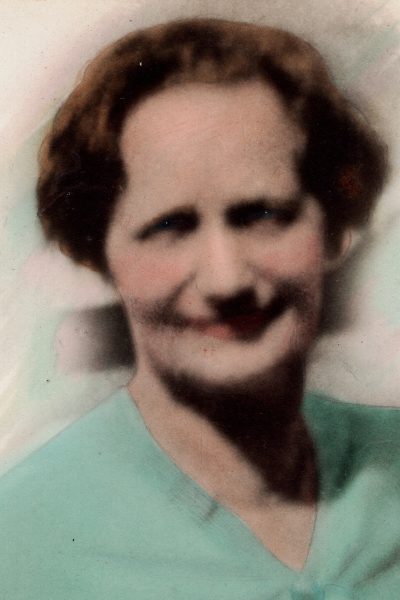
Josephine H. Johnson, née Molin
Josephine died in 1937 at the age of 66. Her bold decisions and strong spirit overcame many difficulties. She was determined to move forward towards creating a better life. That spirit seems to have served her and her family well, in the end. She lost her 25-year-old son, then gave my two-year old orphaned father a loving home. When managing a farm on his own was too much for 62-year old Charles, she pivoted and the family returned to Chicago.
When Josephine died, her daughter Florence was well settled. Roland was 21 and employed in a white-collar job. But could she possibly have imagined the future achievements of her beloved Roland? Professional success, financial security, 58 years of marriage, four children, 12 grandchildren, and four great-great grandchildren at the time of his death. I never heard my father talk about his parents. He was a quiet man and he kept his past dark because his entry into the United States was never legalized. But despite the insecurities that arose after he learned those facts, the love and attentive care of Josephine had nurtured a strength that propelled him forward.
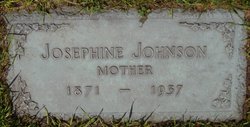
I owe so much to my grandmother Josephine. Of course, my birth to Roland and Helena Johnson, but also my childhood in a family with loving bonds and a strong moral compass. A family that encouraged education, initiative, imagination, and boldness, for me and my sisters as well as for my brother. I believe that Josephine passed on these values to us through her own life choices and through what she gave my father. Perhaps, Josephine, you can hear my “thank you” and smile at the thriving garden that you cultivated in this world.
References
- Jan Bohlin and Anna-Maria Eurenius, “Why They Moved – Emigration from the Swedish Countryside to the United States, 1881 – 1910,” Explorations in Economic History 47, no. 4, (2010): 533-551. ↩︎
- James R. Grossman, et al., eds., The Encyclopedia of Chicago (University of Chicago Press, 2004), 805. ↩︎
- Grossman et al., The Encyclopedia of Chicago, 894. ↩︎
- Joanne J. Meyerowitz, Women Adrift: Independent Wage Earners in Chicago, 1880 – 1930 (University of Chicago Press, 1991), 31. ↩︎
- Donald L. Miller, City of the Century: The Epic of Chicago and the Making of America (Simon & Schuster, 2003), 294. ↩︎
- Stanley Buder, Pullman: An Experiment in Industrial Order and Community Planning, 1880-1930 (Oxford University Press, 1967), 123. ↩︎
- Buder, Pullman, 122.
↩︎

 One Chicago Family
Leave a comment