Teachers abounded in my mother’s family. My mom taught, as did two of her older sisters, three of her aunts, and my mom’s mother (my Grandma Bezzie). For my mother, teaching was a calling. She expressed her deep Roman Catholic faith through caring for the developmentally challenged children in her classrooms. At the time she started teaching, it was also an economic necessity. Teaching carried my mom’s family through the deaths of all the adult males, a heart-breaking lawsuit, the Great Depression, and bankruptcy. In the Renn family, women needed an education, a profession, and a salary to hold the family together.
At the time my mom graduated college, Chicago Normal trained high school graduates for teaching in Chicago public elementary schools with a three-year course focused on teaching methods and content.1 Men and women who wanted a broader education added classes at local universities; for Catholics, primarily DePaul University and Loyola Chicago. However, Loyola Chicago, under pressure from its Jesuit order, resisted enrolling women. Reverend Frederic Siedenburg, who founded professional programs at a satellite campus, found a compromise: women were allowed to take classes at the downtown campus, while the student body at the main campus on Lake Shore (which was only a few blocks from where my mother lived), stayed exclusively male.2
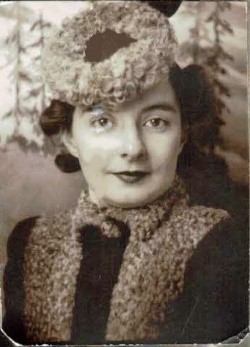
My mom was able to graduate with a Bachelor of Philosophy degree from Loyola Chicago. I have her transcript and her most numerous classes at Loyola were in Philosophy, followed by Psychology, and classes in math, economics, English, history, and Latin. She had 39 semester hours of credit at Chicago Normal transferred to Loyola. Her classes at Normal included Experimental Education, Practice Teaching, and Kindergarten Education. In the early 1940s, she took post-graduate classes at Loyola: Seminar Theories of Personality, The Scholastic Antecedents of Descartes, Individual Psychological Testing, and Psychology of Childhood.
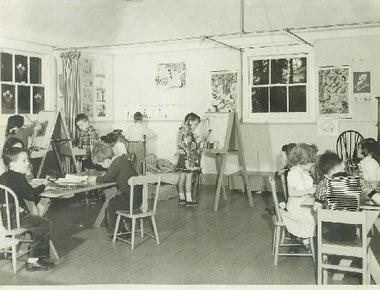
At Chicago Normal, my mom would have received training inspired by the ideals of the progressive education movement, a force in education during the late 19th and early 20th century. Progressive educators reacted against the authoritarian and rote teaching methods that ruled in the 19th century. They believed that children’s natural curiosity and interests lead them to learn and that children learn best by doing.
I have a typed copy of a talk that my mom prepared for parents of an entering kindergarten class, perhaps as part of her student teaching. The children were responsible for classroom tasks, including, “a range of activities from caring for the gold fish to cleaning up the room after the different groups have finished the work planned for the day. Our program also includes a milk period followed by a rest period, stories, poems, dramatizations, rhythms and nature study.”
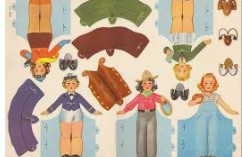
What my mom learned at teachers college and practiced in her kindergarten classroom carried over into our home. Although we had lots of rules, we also always had opportunities and time to explore. At home, my younger sister and I wove potholders on small looms, knitted on spools, cut out paper dolls, filled rubber molds with plaster of Paris to make angels, painted on easels, and acted out plays with marionette puppets. We had children’s books and magazines. And lots of board games. Games drew us together as a family – board games and card games during our two-week summer vacations at a lake resort in Wisconsin and on New Year’s Eve. Our fiercely competitive ping pong games in the basement after extended family dinners originated with my dad – a fun counterpoint to a kindergarten ethic of play nice.
My mom especially enjoyed expressing her creativity in her classroom. She had ideas for us kids, too. My younger sister remembers her wildly successful contribution to a Girl Scout fundraising sale, the idea for which she is sure came from my mom. My sister made candy people by cutting shapes from the plastic netting used as produce bags, sewing them up along the sides and stuffing them with candy. (They sold out fast!) I remember my mom practicing songs for her kindergarten class on our piano at home, My sister and I joining in. That served us well later in church choir and around Girl Scouts campfires. The richness of resources in our home nourished our love of singing, dancing, making things, playing games, and reading.
I don’t mean to suggest that my mother filled a teacher role at home or that she interacted with us all that much, apart from upholding standards for our chores. We were encouraged by our environment and the models of both my father and mother. I and my sisters don’t remember my mother doing activities, even reading, with us. My dad taught us Swedish words and took us to the library. He pointed out the poison ivy on our walks at a local nature center and showed us where to find the berries during our summer vacations in Wisconsin. He taught me about electrical circuits and Morris Code. My mom created an educational environment, but my dad was my teacher at home.
Despite my mom’s pride and pleasure in her role as a professional woman, money always remained central to her work ambitions. She earned two masters’ degrees in order to attain the highest possible pay level for Chicago Public School teachers. My mom’s salary supported mutual respect and interdependence in her marriage even as she strictly kept up her role as wife, household manager, and second-in-charge. But a need and desire to earn good money long preceded any thoughts of what kind of marriage she wanted. Beginning in 1926, the Renn family fell into one crisis after another. The security and respectability that my mom’s parents built began to slip away as she approached her 14th birthday.
In 1926, my grandfather, the family’s main breadwinner, died. His estate went into probate and then a protracted lawsuit. The Great Depression delivered the final blows. My grandmother lost the family home and the family’s income properties. She eventually filed for bankruptcy. In 1928, my mother’s eldest sister was widowed nine days after giving birth to her second child. And in 1932, John Renn, the only surviving son of my grandmother Bezzie, died, leaving a young widow and a three month old baby. My grandmother and her daughters Mary, Catherine, and my mother Helena all eventually went to work teaching. Slowly, financial stability returned, although fears about money haunted my mom throughout her life. There was a remedy for that, though – education and work, the ability to earn one’s own way, backed up by close family ties and trust in God.
But my mother’s education and work did not make life easy. She was proud of her achievement but also ambivalent about it. It set her apart and it set her marriage apart from others in our church and neighborhood. She was also set apart from her teacher friends, whom I recall as mostly unmarried. Amid the conformist pressures of the 1950s and 1960s, the importance that she put on her work felt like a family secret. And, Irish Catholic that she was, she surely felt that her pride in her work cast a shadow of sin. It was complicated.
Learning more about my mom’s experiences in the late 1920s and the 1930s helps me better understand those complications that I uneasily sensed growing up. And it helps me understand and appreciate the values and struggles of my mother and what she passed on to me, the confidence and self-doubt, the ambition and ambivalence, the freedom and fears. And, in the end, the will to make it work and to move forward.
References


Leave a Reply